Why Recovery Sandals Are Meant for After a Workout, Not During Errands All Day
Recovery sandals feel so comfortable right after a hard workout that it’s tempting to just live in them, but that immediate comfort is specifically designed for short-term use, not as a replacement for regular daily footwear.

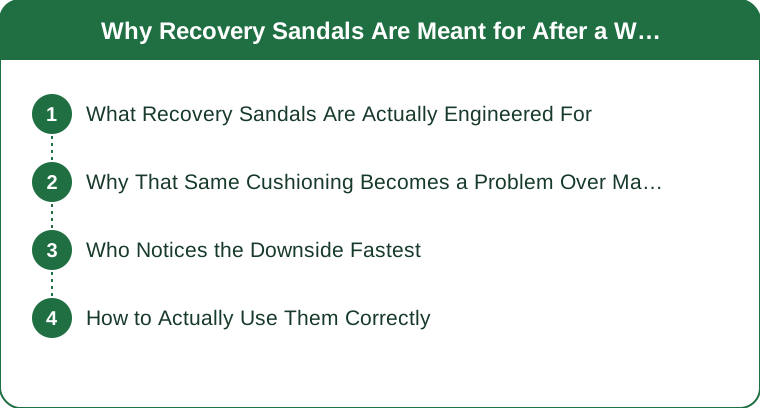
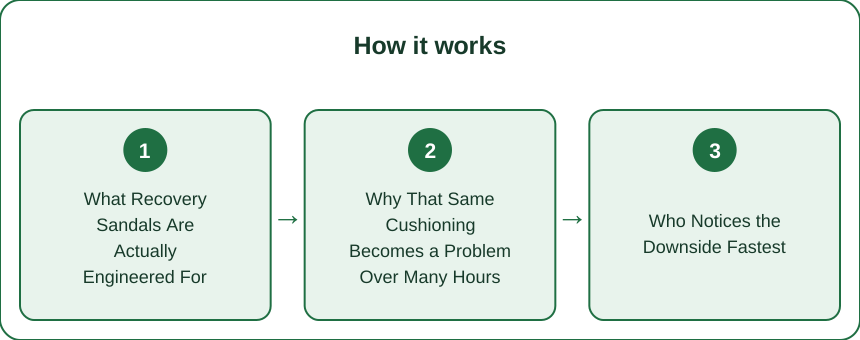
What Recovery Sandals Are Actually Engineered For
The design intent: recovery sandals using a thick, soft foam sole specifically engineered to cushion tired feet for short post-activity periods, a design purpose that’s fundamentally different from the support needs of all-day standing or walking.
Why That Same Cushioning Becomes a Problem Over Many Hours
The mismatch: the soft, unstructured foam that feels great for twenty minutes providing very little arch or motion control support over many consecutive hours, which can let the foot roll or fatigue in ways a structured daily shoe would prevent.

Who Notices the Downside Fastest
The at-risk group: people with any existing foot issues, plantar fasciitis or flat feet especially, tending to notice arch fatigue or discomfort fastest when recovery sandals get worn well beyond their intended short recovery window.
How to Actually Use Them Correctly
The practical guideline: wearing recovery sandals for the one to three hours immediately after a hard workout specifically, then switching to properly supportive daily footwear for extended standing, walking, or errands, and the frame (recovery sandals are built for short post-workout cushioning, not all-day support — switching to real daily shoes after a few hours avoids the arch fatigue that comes from stretching their intended use too far.)
Recovery sandals feel so comfortable right after a hard workout that it’s tempting to just live in them, but they use a thick, soft foam sole specifically engineered to cushion tired feet for short post-activity periods, a purpose that’s fundamentally different from the support needs of all-day standing or walking. That same soft, unstructured foam that feels great for twenty minutes provides very little arch or motion control support over many consecutive hours, which can let the foot roll or fatigue in ways a structured daily shoe would prevent, and people with existing foot issues, plantar fasciitis or flat feet especially, tend to notice that arch fatigue fastest when recovery sandals get worn well beyond their intended short recovery window. Wearing them for the one to three hours immediately after a hard workout, then switching to properly supportive daily footwear for extended standing or errands, uses them the way they’re actually designed to work.
Keep Reading
This article is for general informational and styling purposes only. Fit, sizing, and product availability may vary.