Read the Wear Pattern on Your Recovery Sandals — It Says More Than Your Shoes Do
Quick Answer: Soft EVA footbeds compress permanently where load is highest, so after 4 to 6 weeks they hold a record of your standing and walking pressure. Deep heel-only impressions suggest a heel-dominant stance, a flattened inner arch suggests pronation under load, and asymmetry between left and right is the most useful finding of all.
Your running shoes wear at the outsole, which tells you about your last mile.
Your recovery sandals compress at the footbed, which tells you about the other twenty-three hours.
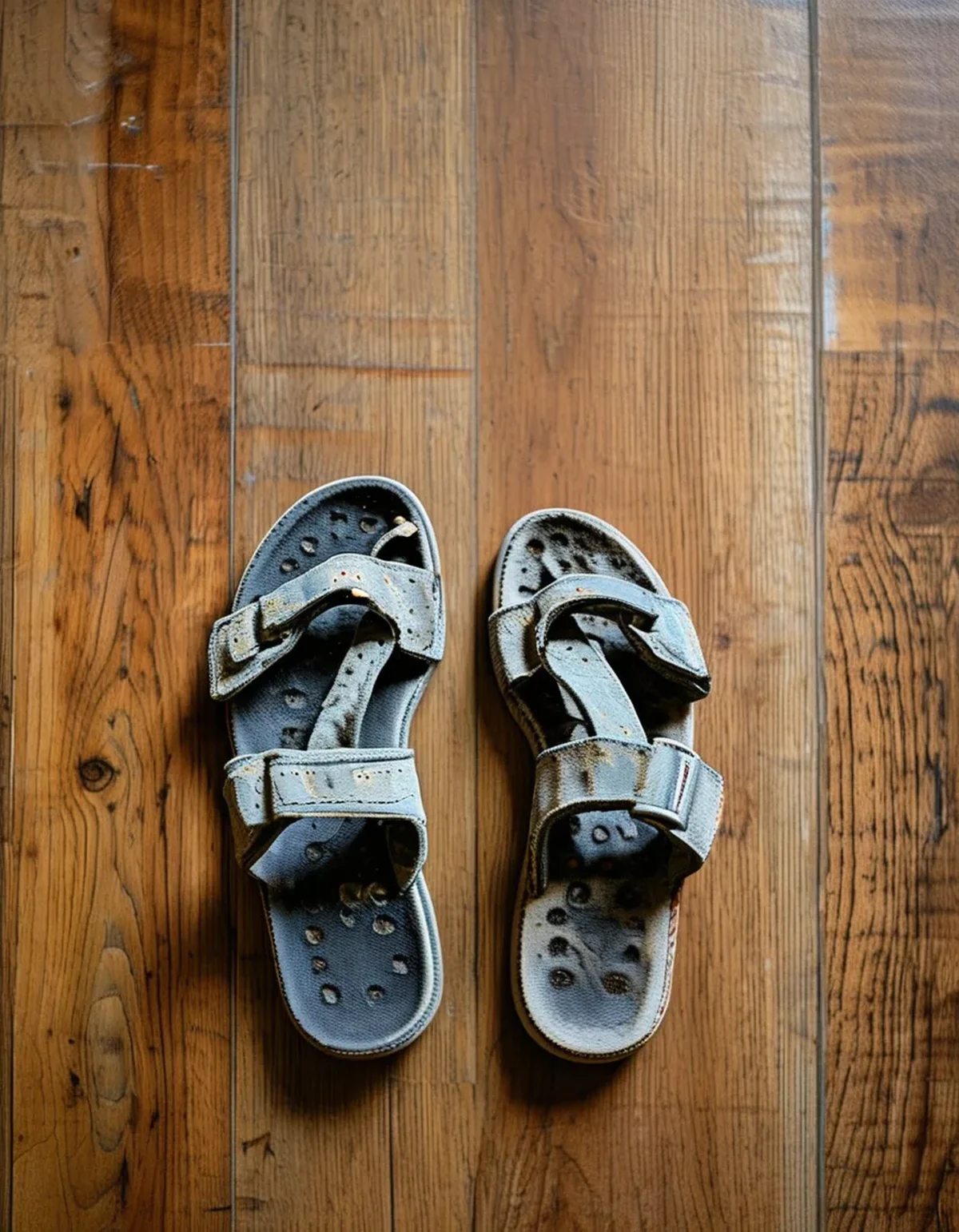
Why does a foam footbed record more than a shoe does?
Because it is soft, and softness records.
EVA compresses permanently under sustained load. The foam in recovery sandals is designed to deform and rebound, but repeated loading in the same spot produces compression set — a permanent dent. That dent maps your pressure distribution directly.
Recovery sandals are worn standing and walking slowly. That is when your habitual posture shows up most clearly. Running shoe wear reflects running gait, which is a different and more athletic pattern than how you actually stand at a kitchen counter.
There is no midsole or shank to distribute the load. A structured shoe spreads pressure across a rigid plate, blurring the pattern. A simple foam sandal transmits it more or less directly.
Hours of wear beat intensity of wear. The pattern reflects the many hours you spend on your feet at home, which is a larger share of your daily loading than any workout.
It takes about 4 to 6 weeks of regular wear to read clearly. Before that, the foam is still rebounding fully. After about six months, the compression has usually gone far enough that the footbed has stopped supporting properly anyway.
What do the common patterns mean?
Five patterns cover most of what people find.
Deep heel impression, shallow forefoot. A heel-dominant standing posture, often with weight sitting behind the midfoot. Common in people who stand for long periods and associated with a slightly reclined posture at the hip.
Flattened inner arch region. Load collapsing medially under standing weight. This is normal to a degree in almost everyone and worth attention when it is markedly asymmetric or when it comes with arch or knee discomfort.
Heavy outer edge along the length. Weight carried on the outside of the foot. Often paired with a more rigid, higher arch, and often the pattern in people who find soft footbeds unsatisfying.
Deep impression under the big toe or the ball. A forefoot-dominant push-off or a habit of standing forward over the toes. Very common in people who wear heeled shoes for work.
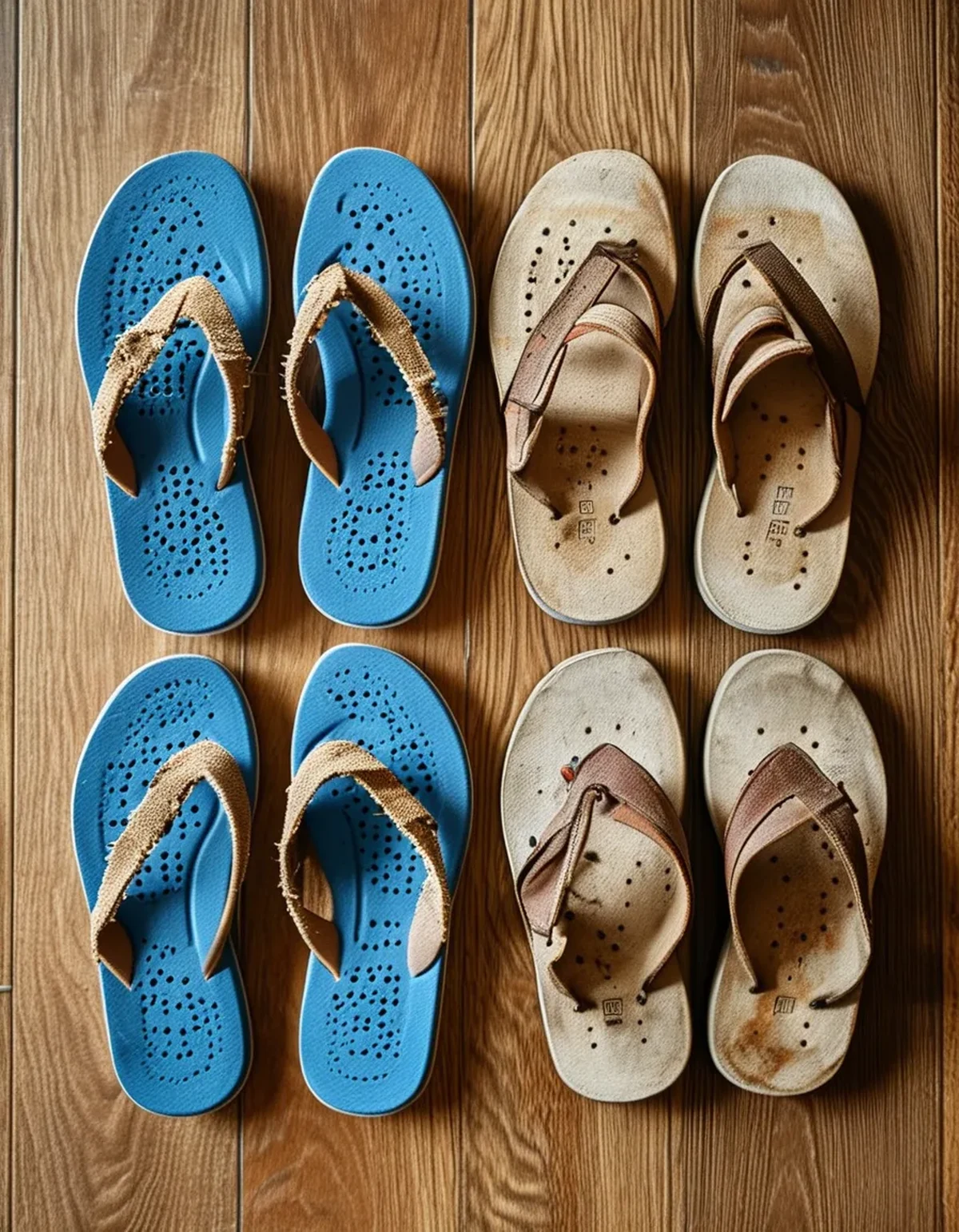
Clear left-right asymmetry. The single most informative finding. Everyone is somewhat asymmetric, but a visibly deeper impression on one side suggests you consistently load one leg more — worth noticing, especially after an old injury that you stopped thinking about.
Myth vs Fact: Reading Wear Patterns
Myth: Your wear pattern tells you which shoes to buy. Fact: It tells you about pressure distribution, not about what footwear will help. The relationship between static foot posture and injury risk is far weaker than the shoe-fitting industry has traditionally suggested, and prescribing shoes from a footprint is not well supported.
Myth: An asymmetric pattern means something is wrong. Fact: Mild asymmetry is universal — nearly everyone has a dominant standing leg. It becomes worth investigating when it is pronounced, new, or accompanied by pain on one side.
Myth: A flattened arch impression means you need arch support. Fact: It means your arch loads under your bodyweight, which is what arches do. Support helps some people with symptoms and does nothing for many without them. The impression alone is not an indication.
Myth: The pattern is stable over time. Fact: It shifts with bodyweight, training load, footwear habits, and injury. Comparing this year’s pair to last year’s is more informative than either one alone — and the third finding here, a pattern that has visibly changed, is the one worth paying attention to.
Myth: Deeper compression means better cushioning. Fact: It means the foam has given up in that spot. A footbed with a deep permanent dent has lost its ability to distribute load there, which is why sandals stop feeling supportive months before they look worn.
How do you actually use this information?
As a prompt to notice something, not as a diagnosis.
Photograph the footbed at six weeks and again at six months. The change between the two says more than either image alone, and it takes ten seconds.
Compare left and right side by side in the same light. Asymmetry is much easier to see in a photograph than in your hands, where you subconsciously compensate.
Use it as a replacement indicator. A footbed with a visible permanent dent under the heel has lost its function there. This is the practical use of the pattern and the one most people ignore until their feet complain.
Notice whether it matches your symptoms. Right-side arch ache with a visibly deeper right arch impression is a coherent story worth mentioning to a professional. A pattern with no symptoms is interesting and does not require action.
Do not self-prescribe orthotics from it. If you have persistent foot, knee, or hip pain, a wear pattern is useful information to bring to a podiatrist or physiotherapist, and a poor basis for buying inserts on your own. This is general information, not medical advice.
FAQ: Recovery Sandal Wear Patterns, Answered
How long before the pattern is readable?
Four to six weeks of regular wear. Before that the foam still rebounds fully and any impression you see disappears overnight. The permanent compression that makes a readable map develops over roughly a month of daily use.
Does an uneven pattern mean I should see someone?
Only if it comes with symptoms or is dramatic. Mild left-right differences are normal. A markedly deeper impression on one side, particularly alongside one-sided pain or an old injury on that leg, is worth mentioning at your next appointment.
When should I replace them based on the footbed?
When any area shows a permanent dent that does not rebound overnight, typically 6 to 12 months of daily wear. That area has lost its cushioning function entirely, which is why sandals often stop feeling good long before the outsole looks worn out.
TL;DR:
- Soft EVA footbeds take a permanent compression set, recording your standing and walking pressure over 4 to 6 weeks.
- Heel-dominant, medial collapse, lateral loading, and forefoot-dominant are the common patterns; left-right asymmetry is the most informative.
- The pattern is not a shoe prescription — it is a prompt to notice something, especially when it matches a symptom.
- A permanent dent that does not rebound overnight means that area has stopped cushioning: time to replace.
Your sandals have been taking notes on how you stand for the last two months. It costs nothing to read them.
Keep Reading
This article is for general informational and styling purposes only. Fit, sizing, and product availability may vary.