Why Recovery Sandals Feel Amazing for 20 Minutes and Then Your Feet Start to Ache
Quick Answer: Recovery sandals are engineered with deep, contoured footbeds designed for brief, low-movement wear right after a workout — the same cushioning and arch contour that feels great standing still for 20 minutes can create pressure points and altered foot mechanics if worn for hours of walking, which is why all-day wear often backfires into discomfort.
The sandals aren’t poorly made — they’re being used outside the window they were actually designed for.

What Recovery Sandal Footbeds Are Actually Built For
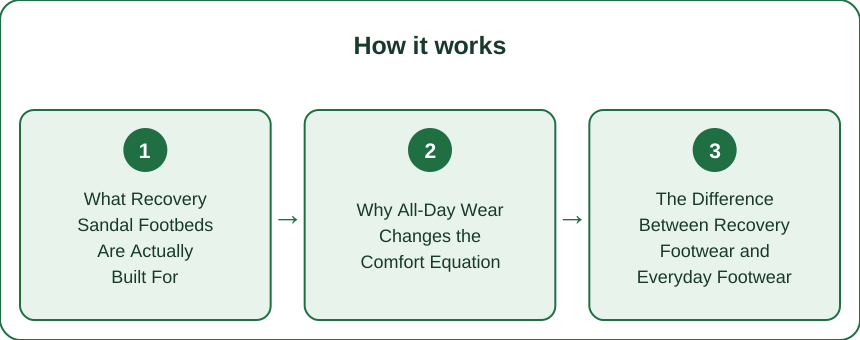
The thick, deeply contoured footbeds common in recovery sandals are designed to passively support the foot’s natural arch while standing or walking short distances, essentially acting like a supportive insole you stand on rather than a shoe built for active, extended movement. That contour is deliberately more aggressive than a standard walking shoe’s support, which is exactly what makes it feel so good after a hard workout — and exactly why it becomes less comfortable the longer you actively walk in it.
Why All-Day Wear Changes the Comfort Equation
A footbed contour that supports the arch perfectly while standing still can press into a slightly different, less ideal spot as your foot flexes and rolls through a normal walking gait repeated hundreds of times over a day. The pressure point that felt supportive at minute 20 can feel like a pressure point in the literal sense by hour four, because the sandal’s fixed shape doesn’t adapt to the dynamic motion of extended walking the way a proper walking shoe’s more flexible sole does.
The Difference Between Recovery Footwear and Everyday Footwear
Recovery sandals typically prioritize deep cushioning and arch contour over flexibility, tread pattern, and secure fit — three things that matter much more for extended walking than for standing around after a lift. Everyday walking shoes flex where your foot naturally flexes; most recovery sandals are stiffer through the midfoot by design, since flexibility isn’t the problem they’re solving.

A Practical Guideline for How Long to Wear Them
A reasonable rule of thumb is treating recovery sandals as post-workout and around-the-house footwear for roughly 1-3 hours at a stretch, not an all-day replacement for regular shoes — errands, extended walking, or a full workday are better suited to standard supportive footwear. Athletes who wear recovery sandals as their main gym-to-car-to-couch footwear on training days, rather than an all-day shoe, tend to report the most consistent comfort from them.
Signs You’ve Been Wearing Them Too Long
Arch soreness that wasn’t present before putting the sandals on, a new ache in a specific spot on the sole, or calf tightness by evening are common signs of overuse rather than a sign the sandals don’t work for your foot. Switching to regular shoes for the remainder of the day at the first sign of this discomfort is usually enough to resolve it without needing a different sandal altogether.
5 Mistakes People Make With Recovery Sandals
1. Wearing them as daily all-purpose shoes instead of short recovery windows. 2. Choosing a size based on the shoe box rather than trying the actual footbed contour against their foot. 3. Wearing them for extended standing at work, assuming ‘recovery’ means unlimited comfort. 4. Ignoring early discomfort signals and pushing through a full day anyway. 5. Skipping a break-in period, since even recovery footbeds benefit from a few short wears before extended use.
FAQ: Recovery Sandal Questions, Answered
Are recovery sandals bad for your feet if worn correctly?
No — used for their intended short post-workout window, they’re generally a comfortable, low-risk choice with no established downside for most foot types.
Can recovery sandals help with plantar fasciitis specifically?
Some people find the arch support genuinely soothing for mild plantar fasciitis symptoms during short wear, but they aren’t a substitute for a proper treatment plan or all-day supportive footwear if the condition is significant.
Is it normal for a new pair to feel different than an older, broken-in pair?
Yes — the footbed material softens slightly with wear, which changes the pressure distribution somewhat; give a new pair a few short wears before judging the fit.
TL;DR:
- Recovery sandal footbeds are built for short, low-movement wear, not extended active walking
- Fixed footbed contour that feels great standing still can create pressure points during hours of gait
- A reasonable window is 1-3 hours post-workout, not an all-day shoe replacement
- New arch or heel soreness after hours in them is a sign to switch to regular shoes, not a design flaw
Recovery sandals do exactly what they’re built for — the discomfort usually shows up only when they’re asked to do a regular shoe’s job instead.
Keep Reading
This article is for general informational and styling purposes only. Fit, sizing, and product availability may vary.