Why the Same 'Recovery Sandal' Category Can Feel Completely Different Brand to Brand
Quick Answer: ‘Recovery sandal’ is a broad marketing category, not a standardized design — brands differ significantly in arch support shape, footbed density, heel cup depth, and overall firmness, so two sandals in the same category can feel dramatically different depending on foot shape and what kind of support a person actually needs.
Most people assume any recovery sandal delivers roughly the same benefit. In practice, the underlying design choices vary enough to change the entire feel and function.

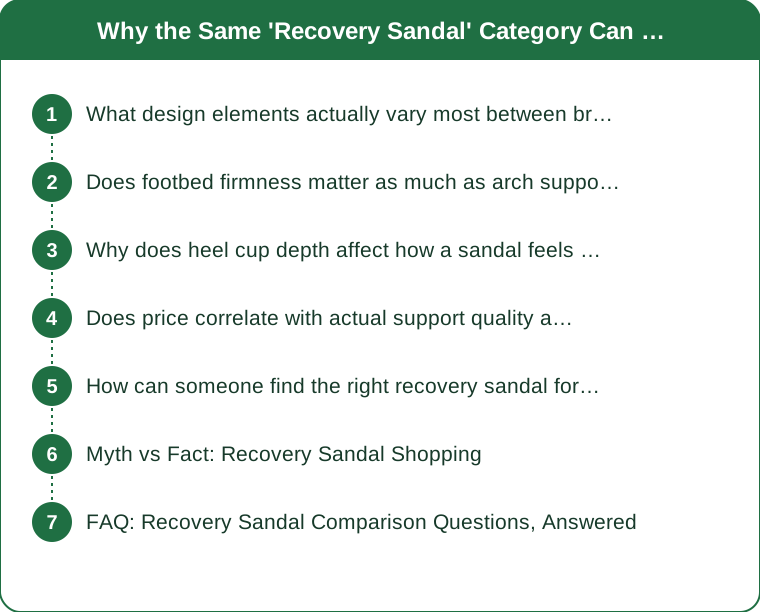
What design elements actually vary most between brands?
Arch support height and shape, footbed density (firm versus plush foam), and heel cup depth are the biggest variables — a high, narrow arch support that feels great for one foot shape can feel uncomfortably intrusive for a different, flatter or wider foot shape.
Does footbed firmness matter as much as arch support?
Yes, independently — a very plush footbed can feel comfortable initially but provide less structural support over a long day of wear, while a firmer footbed provides more consistent support but can feel less immediately cushioned, especially in the first few wears before break-in.
Why does heel cup depth affect how a sandal feels so much?
A deeper heel cup cradles and stabilizes the heel fat pad more, which can meaningfully reduce heel strike discomfort for some people, while a shallower heel cup allows more natural heel movement that others find more comfortable — this is genuinely a personal-fit variable, not a quality difference.

Does price correlate with actual support quality across brands?
Not reliably — some premium-priced recovery sandals prioritize aesthetic or brand positioning over genuine structural support differences, while some mid-range options use very similar underlying support technology, making price an unreliable stand-alone indicator of fit quality for a specific foot.
How can someone find the right recovery sandal for their specific feet?
Trying on multiple brands in person when possible, and paying attention to where pressure concentrates during standing (not just walking a few steps) is more reliable than choosing based on reviews alone, since foot shape variation means one person’s ideal sandal can be another’s uncomfortable one.
Myth vs Fact: Recovery Sandal Shopping
Myth: any recovery sandal is better than a regular sandal for tired feet. Fact: a poorly fitted recovery sandal for your specific foot shape can be less comfortable than a well-fitted regular sandal — fit matters more than category label.
Myth: the firmest support is always the best support. Fact: firmness needs vary by individual foot shape and existing foot conditions — firmer isn’t universally better.
FAQ: Recovery Sandal Comparison Questions, Answered
Is it normal for a recovery sandal to need a break-in period?
Somewhat, especially firmer footbeds, but persistent discomfort beyond the first week or two usually means the fit isn’t right for that foot rather than needing more break-in time.
Do recovery sandals with removable insoles offer more customization?
Yes — they allow swapping in a different insole if the stock one doesn’t match your arch shape, offering more flexibility than fixed-footbed designs.
Does foot condition (like plantar fasciitis) change which brand features matter most?
Yes significantly — specific conditions often benefit from particular arch height or heel cup depth, so it’s worth researching or consulting a podiatrist for condition-specific recommendations rather than choosing generically.
TL;DR:
- ‘Recovery sandal’ covers a wide range of genuinely different support designs, not one standard
- Arch shape, footbed firmness, and heel cup depth vary meaningfully between brands
- Price doesn’t reliably predict which sandal will actually fit your specific foot best
- Trying multiple brands in person beats choosing based on reviews or category alone
Before assuming a recovery sandal ‘doesn’t work’ for you, consider that a different brand’s support shape might — the category name hides more design variation than most shoppers expect.
Keep Reading
This article is for general informational and styling purposes only. Fit, sizing, and product availability may vary.