Why Recovery Sandals Feel Wrong for the First Week
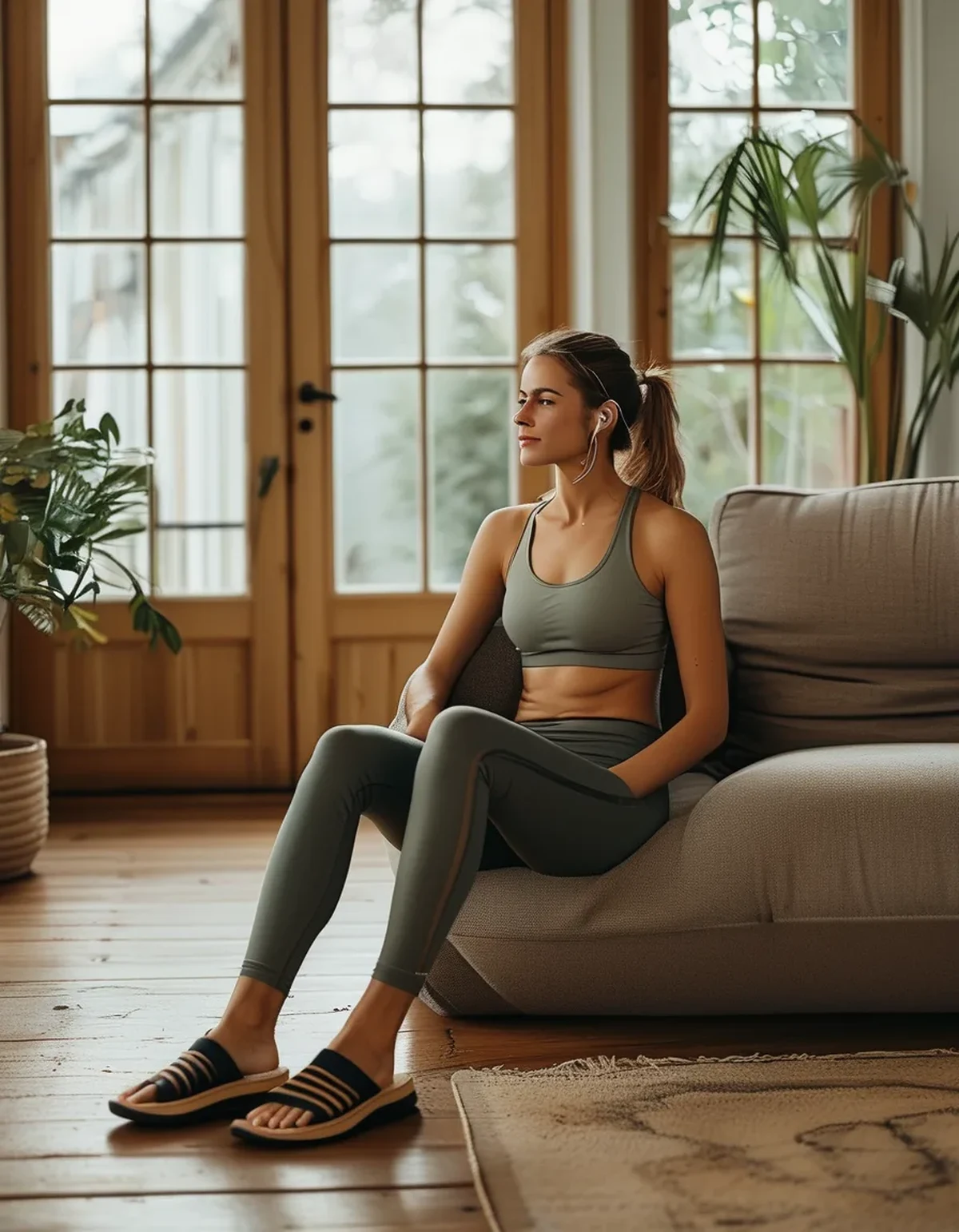
Quick Answer: Recovery sandals feel odd initially because most have a substantial heel-to-toe drop, a rocker profile and very soft foam, all of which change how your foot and calf work. Going from trainers with a firm heel to a thick soft rocker alters ankle and calf loading immediately, and the tissue takes about a week to ten days to adapt. Wearing them for one to two hours daily at first, rather than all day, resolves nearly all of it.
Everyone said they were the best thing for tired feet.
Day three, your calves ache and your arches feel strange.
That is adaptation, and it has a known timeline.
Why do they feel strange at first?
Because they change three things about how you stand and walk at once.
Heel drop is often high. Many recovery sandals have a drop far greater than everyday shoes, which shortens the calf position and changes achilles loading.
The rocker profile alters your gait. A curved sole rolls you through the step differently, reducing work at the toes and shifting it up the chain.
Very soft foam reduces stability. Soft cushioning means more movement at the ankle and more work for the stabilisers. Comfortable, but not passive.
Arch support may be higher than you are used to. A pronounced contour presses into an arch that has spent years in flatter shoes.
No fixation at the heel. Open-back sandals require the toes to grip subtly to keep them on, and that grip fatigues the small foot muscles.
And you wear them constantly at first. The novelty means eight hours on day one, which is the actual cause of most first-week discomfort.
How should you break them in?
Treat them as a piece of equipment, not as slippers.
Start at one to two hours daily. Enough to get the benefit, short enough to avoid overloading unfamiliar tissue.
Build over a week to ten days. Increase by an hour or so daily if there is no lingering soreness.
Use them immediately post-exercise, when they help most. Getting out of tight trainers into a wide cushioned sole is the actual use case.
Avoid long walks in them at first. They are designed for standing and short distances, not for a two-hour city walk.
Stretch the calves during the adjustment. A raised heel shortens the calf position; a couple of minutes of calf stretching offsets it.
If soreness persists past two weeks, the drop is probably wrong for you. Lower-drop recovery footwear exists and suits people who otherwise train flat.

Do they actually do anything?
Some real benefits, some overstated ones, and it is worth separating them.
Real: reduced pressure and better comfort. Wide toe boxes, soft foam and no constriction genuinely relieve tired feet after training or long standing.
Real: less foot fatigue when standing. For people on their feet all day, cushioned supportive footwear reduces discomfort measurably.
Overstated: ‘enhanced recovery’. There is little evidence that footwear accelerates muscle recovery in any measurable physiological sense. It makes you more comfortable, which is worth having, but it is not a recovery modality.
Real: an alternative to going barefoot on hard floors. For people with plantar fasciitis or arch pain, supportive indoor footwear often helps more than bare feet on tile.
Overstated: alignment claims. Marketing around ‘realigning’ the foot or body is not well supported.
Seasonal note: as the weather turns, open recovery sandals become impractical outdoors, and this is when people switch to recovery slides or closed cushioned shoes indoors. The benefit is about the sole and the width, not about the sandal format itself.
5 Recovery Sandal Mistakes
Wearing them all day from day one. The single most common cause of the first-week calf ache.
Using them for long walks. They are designed for standing and short distances. Two hours of city walking in soft rocker sandals is a reliable way to get sore.
Buying the same size as your trainers. Recovery footwear sizing is often different, and a sandal that is too long makes your toes grip constantly.
Ignoring the drop if you normally train flat. Going from a zero-drop trainer to a high-drop sandal is a significant change and deserves a slower transition.
Keeping them past their useful life. Soft foam compresses, and a compressed recovery sandal offers neither cushioning nor stability. Most last six to twelve months with daily use.
And the one nobody warns you about: they are slippery when wet. Soft foam soles on a wet bathroom floor are genuinely hazardous.
FAQ: Recovery Sandal Questions, Answered
How long until they feel normal?
Usually one to two weeks with graduated wear. Persistent discomfort past that suggests the drop or fit is wrong.
Can I wear them all day?
After the adjustment period, many people do. Vary footwear across the week rather than wearing one type exclusively.
Do they help plantar fasciitis?
Many people find cushioned supportive footwear helpful, particularly compared with bare feet on hard floors. It is not a treatment — see a physiotherapist for persistent heel pain.
Are expensive ones better?
Better foam durability, mostly. The comfort difference on day one is smaller than the price difference suggests.
When should I replace them?
When the foam no longer springs back, or when you can see compression under the heel. Typically six to twelve months with daily use.
Can I run in them?
No. They lack the stability and structure for running, and the open heel makes it unsafe.
This is general information, not medical advice.
TL;DR:
- Recovery sandals feel strange initially because of high heel drop, rocker profile and very soft foam.
- Break them in over one to two weeks, starting at one to two hours daily.
- The real benefits are comfort, pressure relief and reduced standing fatigue — not accelerated physiological recovery.
- Use them post-exercise and for standing, not for long walks.
- Replace when the foam stops springing back, usually six to twelve months.
Wear them for two hours after your next session and take them off. The first week is the only difficult part.
Keep Reading
This article is for general informational and styling purposes only. Fit, sizing, and product availability may vary.